

Introduction (Hook + Context)
Online payments are evolving fast as businesses shift toward faster, borderless, and more secure financial systems. At the same time, cryptocurrency adoption is growing globally, with more users and companies exploring digital assets for everyday transactions.
In this changing landscape, Stripe has emerged as one of the most trusted payment gateways for online businesses. With increasing demand for flexible payment options, many companies are now exploring how crypto can fit into modern checkout systems. As a result, stripe crypto payments are becoming an important topic for modern businesses, especially for those operating internationally or in tech-driven industries.
What Are Stripe Crypto Payments?
Stripe is a global payment processor that helps businesses accept online payments through cards, wallets, and various digital methods. On the other hand, crypto payments refer to transactions made using digital currencies such as Bitcoin or stablecoins.
When people talk about stripe crypto payments, they usually mean using Stripe in combination with crypto-enabled systems to accept digital currency indirectly.
It is important to clarify that Stripe is not a pure crypto wallet or a direct cryptocurrency exchange. Instead, it works as a crypto payment gateway facilitator when integrated with third-party tools that allow businesses to accept cryptocurrency payments and convert them into traditional money.
In simple terms, Stripe helps process payments, while external systems handle the crypto side of the transaction, enabling digital currency payments to reach merchants in fiat form.
How Stripe Crypto Payments Work
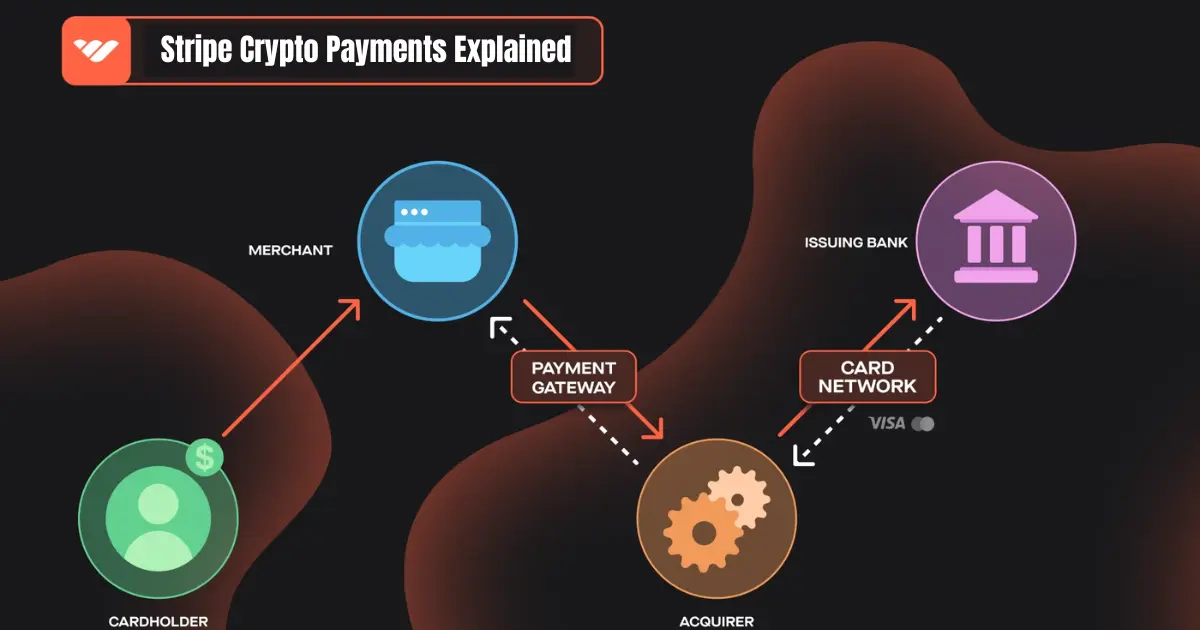
The process behind stripe crypto payments is usually indirect and involves multiple layers of payment processing.
Here is how it typically works:
- A customer selects cryptocurrency as a payment method at checkout
- The transaction is processed through a crypto payment processor
- The crypto is converted into fiat currency such as USD or EUR
- Stripe handles the payment routing through its system
- The final amount is settled into the merchant’s bank account
Simple flow:
User → Crypto wallet → Payment processor → Stripe system → Merchant bank
This structure allows businesses to benefit from blockchain payments integration without directly handling cryptocurrency volatility or storage.
Does Stripe Directly Support Crypto Payments?
Stripe has had an evolving relationship with cryptocurrency over time. In earlier years, it supported Bitcoin payments briefly but later discontinued direct crypto transactions due to volatility and network limitations.
At present, Stripe does not offer full native cryptocurrency support for most businesses. Instead, it focuses on indirect integration through partners and crypto on ramp and off ramp services.
This means that while Stripe cryptocurrency support exists in a limited form, it is not a full native crypto payment solution. The company continues to refine its policies as the digital asset space evolves, making Stripe crypto policy an area that may change in the future.
Ways to Accept Crypto Using Stripe Ecosystem
Even though Stripe does not directly process crypto in most cases, businesses can still accept digital currencies through its ecosystem.
Using Third Party Crypto Gateways
Businesses can integrate crypto payment processors that connect with Stripe checkout systems. These tools handle blockchain transactions while Stripe manages fiat settlement.
Stablecoin Payments Integration
Some modern systems allow payments in stablecoins such as USDT or USDC, which are less volatile compared to traditional cryptocurrencies.
Hybrid Payment Systems
Many businesses now use a combination of card payments and crypto payment integration tools to give customers more flexibility at checkout.
Benefits of Stripe Crypto Payments
There are several advantages to using stripe crypto payments through integrated systems:
- Faster cross border transactions compared to traditional banking
- Lower processing fees in certain payment routes
- Access to a global customer base using digital assets
- Reduced chargeback risks compared to credit card payments
- Smooth automation through Stripe APIs and integrations
These benefits make crypto payment integration tools attractive for modern online businesses.
Limitations and Risks
Despite the benefits, there are important limitations to consider.
Regulatory uncertainty across different countries
Crypto price volatility affecting transaction value
Limited direct support from Stripe for cryptocurrency
Technical complexity of integrating blockchain systems
Compliance requirements such as KYC and AML rules
Understanding crypto payment risks is essential before adopting any hybrid payment model.
Use Cases of Stripe Crypto Payments
Stripe crypto payments are most commonly used in:
- E commerce stores selling digital or physical goods
- SaaS platforms offering subscription services
- Freelancers and digital service providers working globally
- NFT marketplaces using indirect blockchain payment systems
These use cases show how businesses are combining traditional payment systems with Web3 technologies.
Future of Stripe Crypto Payments
The future of digital payments is moving toward more flexible and decentralized systems. Stablecoins are becoming increasingly popular, and many experts believe they will play a major role in cross border transactions.
Stripe may also expand its role in crypto infrastructure again as regulations become clearer and adoption increases. The rise of Web3 payment systems and digital finance evolution suggests that payment platforms will continue to merge traditional and blockchain-based systems.
Artificial intelligence may also enhance payment automation, fraud detection, and transaction optimization in the future.
Conclusion
Stripe crypto payments represent a growing intersection between traditional financial systems and blockchain technology. While Stripe does not fully support native cryptocurrency transactions, it enables businesses to integrate crypto payment solutions through third party tools.
As digital finance continues to evolve, hybrid payment systems are likely to become more common, giving businesses more flexibility in how they accept and process payments globally.
