

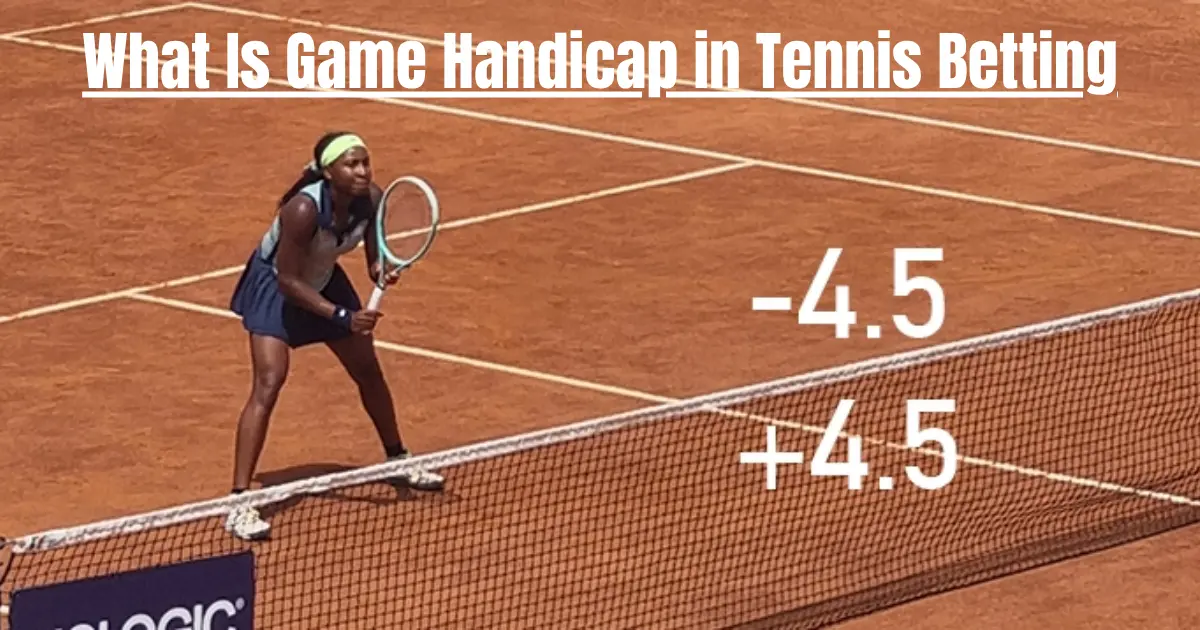
Tennis betting offers many different markets beyond simply predicting which player will win a match. One of the most popular and widely used options is the game handicap market. For beginners, game handicap betting can seem confusing at first because it involves adding or subtracting games from a player’s final score. However, once you understand how it works, it becomes a valuable tool for finding better betting opportunities and potentially improving your overall betting strategy.
In this guide, we will explain what game handicap in tennis betting means, how it works, how payouts are determined, and when bettors typically use this market.
Understanding Tennis Game Handicap Betting
A game handicap is a betting market that gives one player a virtual advantage or disadvantage before the match begins. The sportsbook assigns a certain number of games to either player, and bettors wager on whether a player can cover that handicap.
The purpose of the handicap is to make a match more balanced from a betting perspective. In tennis, there are often matches where one player is heavily favored to win. Betting on the favorite at standard odds may not offer much value. A game handicap allows sportsbooks to create more competitive betting options.
For example:
- Novak Djokovic: -5.5 games
- Opponent: +5.5 games
If you bet on Djokovic at -5.5 games, he must win by at least six games overall for your bet to be successful.
If you bet on the opponent at +5.5 games, the opponent can lose the match and your bet can still win, provided they lose by fewer than six games.
This flexibility is what makes handicap betting attractive to many tennis bettors.
How Games Are Counted in Tennis
Before diving deeper into handicap betting, it is important to understand how games are counted in tennis.
A tennis match consists of:
- Points
- Games
- Sets
- Match
Players win points to win games. They win games to win sets, and they win sets to win the match.
When calculating a game handicap, sportsbooks count the total number of games won by each player throughout the entire match.
For example, imagine the final score is:
- Player A wins 6-4, 6-4
Total games won:
- Player A: 12 games
- Player B: 8 games
Difference:
- Player A wins by 4 games
This four-game margin is what matters when determining game handicap bets.
How a Tennis Game Handicap Works
Let’s look at a practical example.
Suppose the handicap market is:
- Player A: -3.5 games
- Player B: +3.5 games
The final score is:
- 6-4, 6-4
Total games:
- Player A: 12
- Player B: 8
Margin:
- Player A wins by 4 games
After applying the handicap:
Player A:
- 12 – 3.5 = 8.5
Player B:
- 8 + 3.5 = 11.5
Since Player A won by more than 3.5 games, Player A covers the handicap and that bet wins.
If the final score had been:
- 7-6, 7-6
Total games:
- Player A: 14
- Player B: 12
Margin:
- 2 games
Player A would not cover the -3.5 handicap because the winning margin is only two games.
In that case, the +3.5 games bet on Player B would be successful.
Why Sportsbooks Offer Game Handicap Markets
Game handicaps serve several purposes.
Creating Balanced Betting Markets
When one player is significantly stronger than the other, standard match-winner betting often provides very low odds on the favorite.
For example:
- Favorite: 1.10
- Underdog: 7.00
Many bettors are not interested in risking money on such short odds.
A handicap market creates more attractive prices by requiring the favorite to win by a larger margin.
Offering More Betting Choices
Many bettors enjoy analyzing matchups in greater detail.
Instead of simply asking:
“Who will win?”
Handicap betting asks:
“By how much will they win?”
This creates additional opportunities for informed bettors.
Increasing Market Variety
Tennis is one of the most statistically driven sports. Handicap markets allow sportsbooks to offer numerous betting options while giving bettors more flexibility.
Examples of Winning and Losing Handicap Bets
Example 1: Favorite Covers
Handicap:
- Carlos: -4.5 games
- Opponent: +4.5 games
Final score:
- 6-2, 6-3
Games won:
- Carlos: 12
- Opponent: 5
Margin:
- 7 games
Carlos covers the -4.5 handicap.
Winning bet:
- Carlos -4.5
Example 2: Underdog Covers Despite Losing
Handicap:
- Favorite: -5.5 games
- Underdog: +5.5 games
Final score:
- 7-6, 6-4
Games won:
- Favorite: 13
- Underdog: 10
Margin:
- 3 games
Although the favorite wins the match, the underdog covers the handicap.
Winning bet:
- Underdog +5.5
Example 3: Close Match
Handicap:
- Player A: -2.5 games
Final score:
- 6-4, 4-6, 6-4
Games won:
- Player A: 16
- Player B: 14
Margin:
- 2 games
Player A fails to cover the handicap because the margin is less than 2.5 games.
Winning bet:
- Player B +2.5
The Difference Between Match Betting and Handicap Betting
Many beginners confuse these two betting types.
Match Winner Bet
You simply choose the player who wins the match.
Example:
- Bet on Player A.
- Player A wins.
- Your bet wins.
Handicap Bet
You choose whether a player will exceed the assigned game spread.
Example:
- Player A wins the match.
- But Player A does not cover the handicap.
Your handicap bet loses even though your chosen player won.
This distinction is critical when betting on tennis.
Positive and Negative Handicaps Explained
Negative Handicap
A negative handicap is assigned to the favorite.
Example:
- Player A -4.5
Player A must win by at least five games.
The favorite needs a dominant performance to cover the spread.
Positive Handicap
A positive handicap is assigned to the underdog.
Example:
- Player B +4.5
Player B can lose by up to four games and the bet still wins.
This makes positive handicaps appealing when bettors expect a competitive match.
Factors That Influence Game Handicap Outcomes
Successful handicap betting requires more analysis than simply predicting the winner.
Playing Surface
Different surfaces affect margins of victory.
Hard courts, clay courts, and grass courts can produce very different match dynamics.
Some players dominate on one surface but struggle on another.
Serving Ability
Strong servers often win many games even when losing matches.
This can help underdogs cover large handicaps.
Players with powerful serves frequently force tiebreaks, keeping game margins small.
Recent Form
Current performance levels matter significantly.
A top-ranked player returning from injury may win but fail to cover a large handicap.
Meanwhile, an underdog in excellent form may perform much better than expected.
Head-to-Head History
Previous meetings between players can provide useful insights.
Some players consistently push elite opponents into close contests despite losing.
These situations often create value on positive handicaps.
Tournament Motivation
Motivation levels vary throughout the season.
In major tournaments, favorites usually play with maximum focus.
In smaller events, highly ranked players may conserve energy or experiment with tactics, potentially affecting handicap results.
What Is an Alternative Game Handicap?
Most sportsbooks offer multiple handicap options.
For example:
Main handicap:
- Player A -4.5
Alternative handicaps:
- Player A -2.5
- Player A -3.5
- Player A -5.5
- Player A -6.5
The easier the handicap, the lower the odds.
The harder the handicap, the higher the odds.
This allows bettors to choose their preferred balance between risk and reward.
Game Handicap vs Set Handicap
Another common tennis market is the set handicap.
These markets are related but different.
Game Handicap
Based on total games won.
Example:
- Player A -4.5 games
Set Handicap
Based on sets won.
Example:
- Player A -1.5 sets
In a best-of-three match, a -1.5 set handicap requires Player A to win 2-0.
Many bettors prefer game handicaps because they offer a more detailed measure of match competitiveness.
Advantages of Tennis Game Handicap Betting
Better Odds on Favorites
Instead of accepting extremely low odds on a strong favorite, bettors can increase potential returns through handicaps.
More Ways to Find Value
A player can lose the match and still cover the handicap.
This creates opportunities not available in standard winner markets.
Suitable for Statistical Analysis
Tennis generates large amounts of data.
Experienced bettors often use game margins, service hold percentages, and break-point statistics when evaluating handicap markets.
Useful in Mismatched Contests
When one player is heavily favored, handicaps often provide more attractive betting options than moneyline wagers.
Risks of Tennis Handicap Betting
Margin Matters
Correctly predicting the winner is not enough.
The final game difference determines the result.
Tiebreaks Can Change Everything
A player may dominate a match yet win several sets via tiebreaks.
This can significantly reduce the overall game margin.
Late Match Variability
Players sometimes relax after gaining a large lead.
This can allow opponents to win extra games and affect handicap outcomes.
Injury Concerns
Tennis matches can change quickly due to injuries or physical issues.
Even a slight fitness problem may prevent a favorite from covering a large handicap.
Common Beginner Mistakes
Ignoring Matchup Style
Some bettors focus only on rankings.
Styles of play often matter more than rankings when evaluating handicaps.
Overestimating Favorites
A player may be much better overall yet still struggle to cover large spreads.
Ignoring Strong Servers
Powerful servers often keep matches close even against elite opponents.
Betting Based on Reputation
Popular players frequently attract public betting support, which can inflate handicap lines.
Analyzing current performance is usually more important than reputation.
Tips for Betting on Tennis Game Handicaps
Study Recent Results
Look beyond wins and losses.
Pay attention to game margins.
Analyze Surface Statistics
Performance often varies dramatically between clay, grass, and hard courts.
Compare Sportsbooks
Different sportsbooks may offer slightly different handicap lines.
A half-game difference can significantly impact long-term results.
Understand Match Format
Best-of-three and best-of-five matches create different betting dynamics.
Longer matches often produce larger game margins.
Manage Your Bankroll
Even strong betting opinions can lose due to tiebreaks, momentum swings, or unexpected events.
Responsible bankroll management is essential.
Final Thoughts
So, what is game handicap in tennis betting?
A game handicap is a betting market that adds or subtracts games from a player’s final total to create a more balanced wagering opportunity. Instead of simply predicting who wins the match, bettors predict whether a player can cover a specific game spread.
This market is popular because it provides better odds on favorites, additional value opportunities on underdogs, and a deeper level of strategic analysis. Understanding how games are counted, how handicaps are applied, and which factors influence match margins can help bettors make more informed decisions.
For beginners and experienced bettors alike, game handicap betting remains one of the most versatile and widely used tennis betting markets. By learning how it works and applying sound analysis, bettors can gain a better understanding of match dynamics and potentially identify value beyond traditional match-winner bets.
